


1. Sodium Carboxymethyl Cellulose(CMC) for Battery Industry
Sodium Carboxymethyl Cellulose is widely used in battery-making field.
In addition to the existing standard-sized products, we also offer derivative products for your selection. The derivative products are more targeted and are usually used for various specific application scenarios.

2. Commodity Name: Sodium Carboxymethyl cellulose
Types
Specification B1 B2 B3 B11 B12 B13
Appearance White or Yellowish Powder
D.S 0.65-0.85 ≥0.9
Viscosity (mPa.s) 300-800 800-1200 ≥1200 300-800 800-1200 ≥1200
1% solution testing
PH (25°C) 6.5-8.5
Moisture(%) ≤7.0
Purity(%) ≥99.0
Particle size (Sieving) Not less than 98% ( pass through 80 mesh )
CAS No.: 【9004-32-4】
E No.: 【E466】
Molecular formula :[C6H7O2(OH)2OCH2COONa]n
Synonyms: Carboxymethyl Cellulose, Carboxy Methyl Cellulose, CMC, Sodium CMC, Na-CMC
HS Code: 39123100
3. Description
Sodium Carboxymethyl Cellulose is a cellulose derivative with carboxymethyl groups bound to some of the hydroxyl groups of the glucopyranose monomers that make up the cellulose backbone. It is often used as its sodium salt, sodium carboxymethyl cellulose.
4. Products
1) High-purity low-iron type
Recommended Model: (Derivative) Batt-HP 2000
Viscosity Range: 1,500-2,500
DS Value: 0.65-0.85
Key Features: Iron content controlled at ≤0.005% (exceeding COA standards) to prevent iron impurities from affecting battery performance
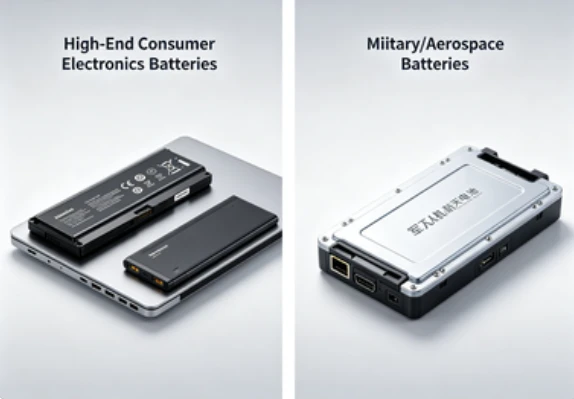
Typical Applications: High-end Consumer Electronics Batteries: Requires extremely high self-discharge and safety performance; Military/Aerospace Batteries: Requires extreme reliability
2) Ultra-low sodium ion type
Recommended model: (Derivative) Batt-LowNa 1800
Viscosity range: 1,500-2,200
DS value: ≥0.90
Key features: Ultra-low sodium ion content, minimizing impact on initial efficiency and cycling performance
Typical applications: High initial efficiency requirements Batteries: Premium products with initial efficiency ≥92%; Sodium-ion battery-specific: Prevents sodium ion interference

3) For fast-charging batteries
Recommended Model: (Derived) Batt-FastCharge 1500
Viscosity Range: 1,200-1,800
DS Value: ≥0.90
Key Features: Optimized molecular structure ensures strong adhesion while providing excellent lithium-ion transport channels
Typical Applications: Fast-charging power batteries: 80% charge in 10 minutes; High-power batteries: Start-stop batteries, electric tools

4) High energy density dedicated
Recommended Model: (Derived) Batt-HighEnergy 3000
Viscosity Range: 2,500-3,500
DS Value: 0.65-0.85
Key Features: Maintains slurry dispersion and electrode strength under high compaction density, meeting high energy density requirements
Typical Applications: High-nickel ternary battery systems Anode: Energy density ≥300Wh/kg; Silicon-carbon anode: Systems with 5%-10% Si content

5) Long Cycle Life Specialized
Recommended model: (Derived) Batt-LongLife 2500
Viscosity range: 2,000-3,000
DS value: ≥0.90
Key features: Long-term stability in electrolytes, reduces binder network degradation during cycling
Typical applications: Energy storage batteries: Cycle life ≥8,000 cycles; Lithium iron phosphate (LFP) anode: Long-life LFP batteries

6) Specialized for low-temperature performance
Recommended model: (Derivative) Batt-LowTemp 1200
Viscosity range: 800-1,500
DS Value: ≥0.90
Key features: Maintains slurry stability at low temperatures while reducing lithium-ion transport resistance in cold conditions
Typical applications: Batteries for cold regions: Operates normally below-20°C; Aviation batteries: High-altitude low-temperature environments

7) High temperature performance dedicated
Recommended model: (Derivative) Batt-HighTemp 2800
Viscosity range: 2,200-3,200
DS value: ≥0.90
Key features: Resistant to degradation at high temperatures, maintains adhesion performance, and prevents electrode degradation during high-temperature cycling
Typical applications: High-temperature environments Batteries: Tropical regions, near engine compartments; 60°C high-temperature cycling: Special industrial applications

8) Water-based cathode dedicated
Recommended Model: (Derived) Batt-Cathode 3500
Viscosity Range: 3,000-4,000
DS Value: ≥0.90
Key Features: Specifically designed for aqueous cathode systems (LFP, LMFP), maintaining stability under high pH conditions
Typical Applications: Lithium iron phosphate cathode: Aqueous cathode process, environmentally friendly and cost-effective; Lithium manganese oxide cathode: Development of aqueous systems

9) Lithium titanate anode dedicated
Recommended model: (Derivative) Batt-LTO 1800
Viscosity range: 1,500-2,200
DS Value: 0.65-0.85
Key features: Excellent compatibility with lithium titanate materials, ensures stable slurry dispersion and electrode adhesion
Typical applications: Lithium titanate batteries: Fast charging, long lifespan, suitable for public transportation and energy storage

10) Specialized for natural graphite
Recommended Model: (Derived) Batt-NG 1500
Viscosity Range: 1,200-1,800
DS Value: 0.65-0.85
Key Features: Optimized for natural graphite surface properties, delivering superior dispersion and coating performance
Typical Applications: Natural graphite anodes: Cost-sensitive applications; Spherical graphite: Compatible with natural graphite

11) Dedicated to artificial graphite
Recommended Model: (Derived) Batt-AG 2000
Viscosity Range: 1,500-2,500
DS Value: 0.65-0.85
Key Features: Excellent compatibility with artificial graphite, ensuring stable slurry rheology and electrode strength
Typical Applications: Artificial graphite anode: Mainstream power battery applications; High-rate artificial graphite: Fast-charging artificial graphite

12) Specialized for silicon-oxygen anodes
Recommended model: (Derivative) Batt-SiOx 4000
Viscosity range: 3,500-4,500
DS value: ≥0.90
Key characteristics: Specifically designed for silicon-oxygen materials to suppress volume expansion and maintain electrode structural integrity
Typical application scenarios: Silicon-oxygen anode (SiOₓ): content 5%-15%; First-generation silicon-carbon anode: Commercial silicon-based anode

13) Specialized for nano-silicon anodes
Recommended model: (Derived) Batt-SiNano 6000
Viscosity range: 5,000-7,000 DS value: ≥0.90
Key features: Provides exceptional adhesion and cushioning network for nano-silicon's significant volumetric expansion
Typical applications: Nano-silicon anode: Next-generation high energy density; Pure silicon anode: Cutting-edge R&D project

14) Specialized for hard carbon anodes
Recommended Model: (Derived) Batt-HardCarbon 2200
Viscosity Range: 1,800-2,500
DS Value: 0.65-0.85
Key Features: Excellent compatibility with hard carbon materials, ensures stable slurry dispersion and electrode adhesion
Typical Applications: Sodium-ion battery anode: Hard carbon is the mainstream anode material; Potassium-ion battery: Emerging battery systems

15) Specialized for soft carbon anodes
Recommended model: (Derived) Batt-SoftCarbon 1600
Viscosity range: 1,200-2,000
DS Value: 0.65-0.85 Key features: Ideal for dispersing and bonding soft carbon materials, enhancing electrode performance
Typical applications: Fast-charging anode: Soft carbon materials for fast charging; Hybrid anode: Soft carbon + graphite composite

16) SBR compatibility optimization type
Recommended Model: (Modified) Batt-SBRmate 2300
Viscosity Range: 2,000-2,800
DS Value: ≥0.90
Key Features: Excellent compatibility with various SBR emulsions, forming a uniform adhesive network to enhance electrode sheet peel strength
Typical Applications: General-purpose anode formulation: Compatible with various SBR systems; High-performance anode: Systems requiring extreme adhesion

17) Not dedicated to SBR system
Recommended model: (Derivative) Batt-NoSBR 4500
Viscosity range: 4,000-5,000
DS Value: 0.65-0.85
Key features: Provides sufficient bonding strength without SBR, simplifying formulation systems
Typical applications: Dry electrode process: Solvent-free electrode preparation; Simplified formulation: Reduced components, lower costs

18) High-speed coating dedicated
Recommended model: (Derivative) Batt-HighSpeed 1400
Viscosity range: 1,000-1,800
DS value: 0.65-0.85
Key features:The slurry exhibits significant viscosity reduction under high shear forces, making it ideal for high-speed coating applications exceeding 60m/min
Typical applications: large-scale power battery production lines (efficiency-first) and roll-to-roll high-speed coating systems (capacity enhancement)

19) Specialized for thick electrode coating
Recommended model: (Derived) Batt-Thick Electrode 2800
Viscosity range: 2,200-3,200
DS Value: 0.65-0.85
Key features:Prevents slurry sedimentation and cracking during thick electrode coating, ensuring uniform coating
Typical applications: High energy density thick electrodes (>150μm) – enhances energy density; Energy storage battery thick electrodes – cost-optimized design

20) For dry electrode
Recommended Model: (Derived) Batt-DryProcess 5000
Viscosity Range: 4,500-5,500
DS Value: 0.65-0.85
Key Features: The powder state is directly mixed with active material in dry process, providing binding action in dry electrode manufacturing
Typical Applications: Dry electrode process: Used in Tesla 4680 battery production; Solvent-free electrode manufacturing: Environmentally friendly and cost-effective

21) Solid-state battery-specific
Recommended model: (Derived) Batt-SolidState 3500
Viscosity range: 3,000-4,000
DS value: ≥0.90
Key features: Compatible with solid-state electrolyte materials, providing stable electrode structure in solid-state battery systems
Typical applications: Oxide solid-state electrolytes: LLZO, LATP systems; Sulfide solid-state electrolytes: Suitable for anode binders in sulfide systems

22) For supercapacitors
Recommended model: (Derivative) Batt-SuperCap 2000
Viscosity range: 1,500-2,500
DS Value: 0.65-0.85
Key features: Provides excellent electrochemical performance for supercapacitor electrode bonding and dispersion
Typical applications: Double-layer capacitors: Activated carbon electrodes; Hybrid supercapacitors: Lithium-ion capacitors

23) Fuel cell dedicated
Recommended model: (Derivative) Batt-FuelCell 800
Viscosity range: 500-1,000
DS Value: 0.65-0.85
Key characteristics: Acts as a binder and dispersant in the fuel cell catalyst layer without affecting proton conductivity
Typical applications: Proton exchange membrane fuel cells: Catalyst layer preparation; Membrane electrode assemblies: Enhancing electrode stability

24) Zinc-ion battery-specific
Recommended model: (Derivative) Batt-Zinc 1800
Viscosity range: 1,500-2,200
DS Value: 0.65-0.85
Key characteristics: Stabilizes in aqueous zinc-ion batteries. Suitable for zinc anode systems
Typical applications: Aqueous zinc-ion batteries: A safe and eco-friendly new system; Zinc-based batteries: Zinc-nickel, zinc-air, etc.

25) Sodium-ion battery anode dedicated
Recommended Model: (Derived) Batt-Sodium 2000
Viscosity Range: 1,500-2,500
DS Value: ≥0.90
Key Features: Specifically engineered for hard carbon anodes, delivering stable performance in sodium-ion battery electrolytes
Typical Applications: Sodium-ion batteries: Emerging technology in energy storage; Hard carbon anodes: Compatible with sodium-ion systems

26) Lithium-sulfur battery-specific
Recommended model: (Derivative) Batt-LiS 2500
Viscosity range: 2,000-3,000
DS value: ≥0.90
Key characteristics: Stabilizes lithium-sulfur battery systems and suppresses polysulfide shuttle effect
Typical applications: Lithium-sulfur batteries: Next-generation high-energy-density batteries; Sulfur cathode binder: Compatible with sulfur cathode materials

27) Laboratory development dedicated
Recommended model: (Derivative) Batt-Lab 1500
Viscosity range: 1,200-1,800
DS Value: 0.65-0.85
Key features: Small packaging, high batch consistency, suitable for R&D testing and small-scale preparation
Typical application scenarios: University/institute laboratories: Battery material development; Corporate R&D centers: New formulation development

28) Microimpurity Control Type
Recommended model: (Derivative) Batt-UHP 2200
Viscosity range: 1,800-2,500
DS value: ≥0.90
Key characteristics: Ultra-low impurity content (Fe≤0.001%, Na≤0.1%, Cl≤0.05%), meeting the most stringent requirements
Typical application scenarios: High-end medical device batteries: Implantable medical devices; Aerospace satellite batteries: Extreme reliability requirements

5. Properties
A, our battery grade CMC has good compatiblity,which can be mixed with various metal powder.
|
Types
|
B1 | B2 | B3 | B11 | B12 | B13 |
| Appearance | White or Yellowish Powder | |||||
| D.S | 0.65-0.85 | ≥0.9 | ||||
| Viscosity (mPa.s) | 300-800 | 800-1200 | ≥1200 | 300-800 | 800-1200 | ≥1200 |
| 1% solution testing | ||||||
| PH (25°C) | 6.5-8.5 | |||||
| Moisture(%) | ≤7.0 | |||||
| Purity(%) | ≥99.0 | |||||
| Particle size (Sieving) | Not less than 98% ( pass through 80 mesh ) | |||||
B, it can improve the voltage of battery,and reduce essential resistance .
C, it offer stable viscosity and adhesive force .
6. Characteristics
A, excellent hydrophilicity .
B, stable viscosity, high adhesive force .
C, good transparency and fluidity of aqueous solution .
D, low metal content .
E. Low gel.
7. Package
Packing:25kg kraft paper bag, or other packing as clients request.
8. Storage
A.Store in a cool, dry, clean, ventilated environment.
B.The product for pharmaceutical and food grade should not be put together with toxic substance and harmful substance or substance with peculiar smell during transportation and storage.
C. Since the date of production, a preservation period should not exceed 4 years for the industrial product and 2 year for the product for pharmaceutical and food grade.
D. The products should be prevented from water and package bag damaging during transportation.
We can produce food grade Sodium Carboxymethyl Cellulose with high purity, very high viscosity according to the customer's requirements
9. Certificate for Kosher, HALAL, ISO9001, ISO14001 and so on.

We can provide detailed test indicators for each product model, and derivative products also support customization. If you need this information or have other production application requirements, please feel free to contact us at any time!
Hot Tags: battery grade cmc(derivative), China , manufacturer, factory, cheap, high-purity, food-grade, CMC Battery, CMC Battery grade, CMC Food grade, CMC Paper making grade, painting grade cmc, stabilizer